Global Retail
Spatial Design, Packaging Architecture, and Modular POS Ecosystems
2022–2025Trade show booths
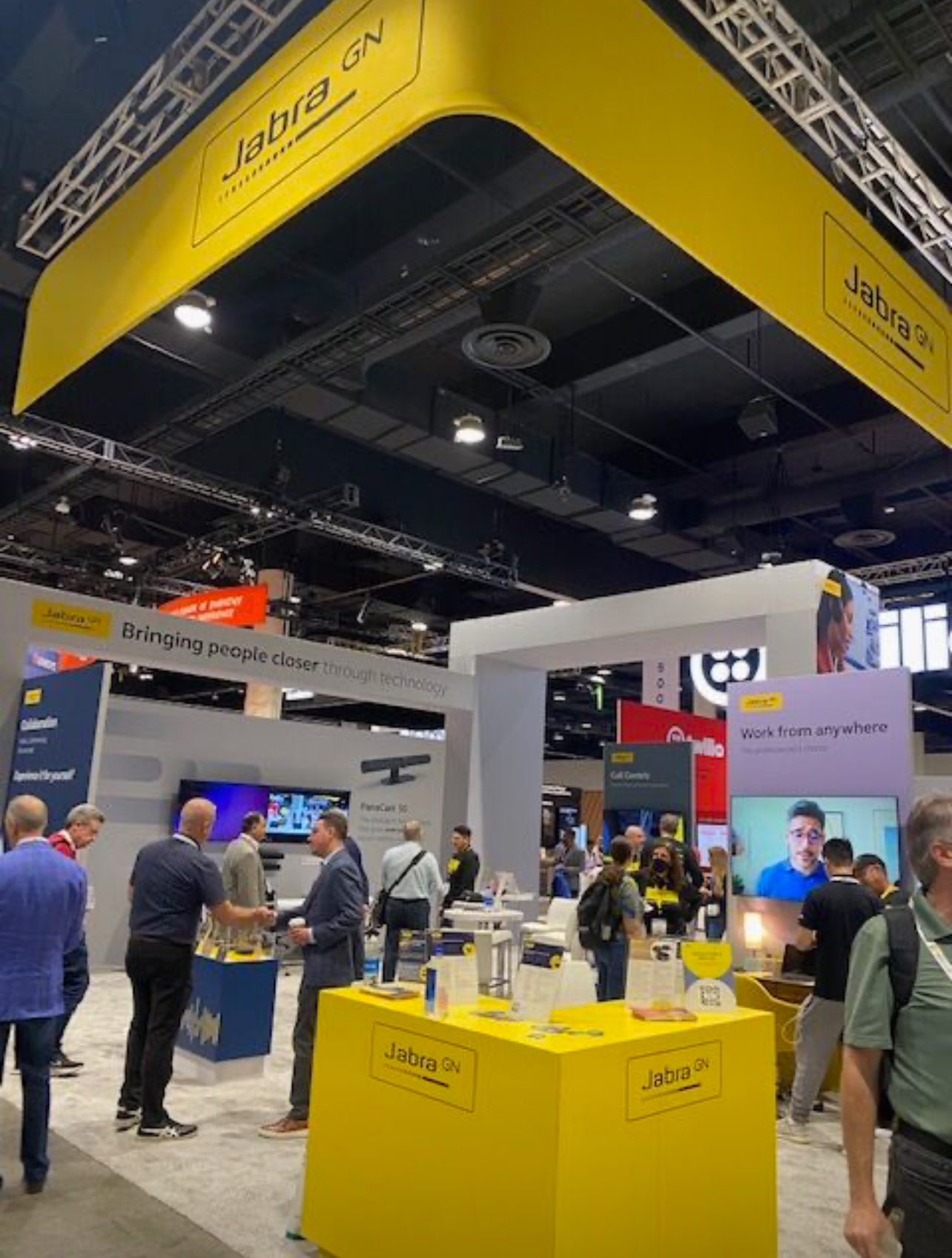
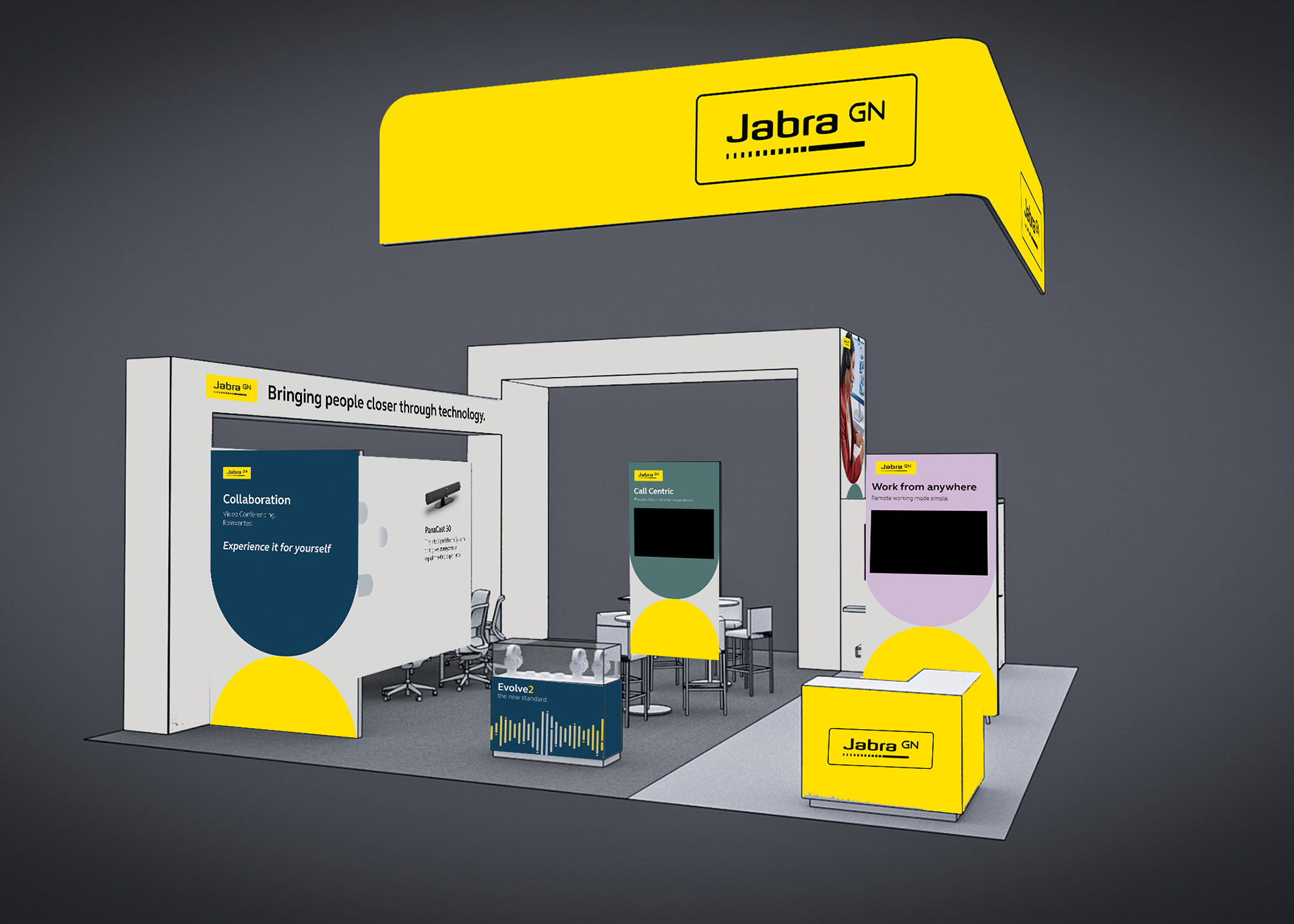
Jabra needed its digital brand to hold up physically — at trade show scale, built by fabricators, seen from across a convention floor. I took the existing yellow/gray identity and adapted it for a modular booth system — one set of components that rearranges into different configurations without losing a unified look. Two things came out of it, and they did different jobs: vendor-ready print files, which is what the fabricators actually built from, and rough Photoshop mockups, which were for stakeholders to see the design standing up before anyone committed to it.

Packaging
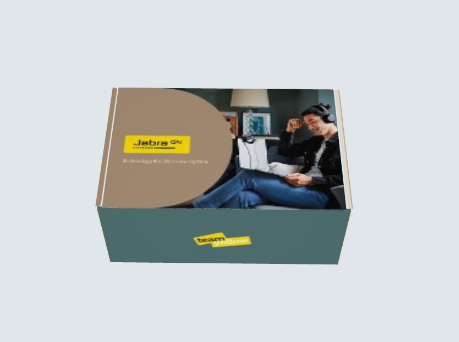
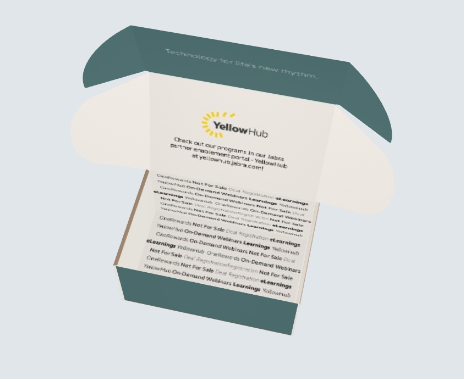
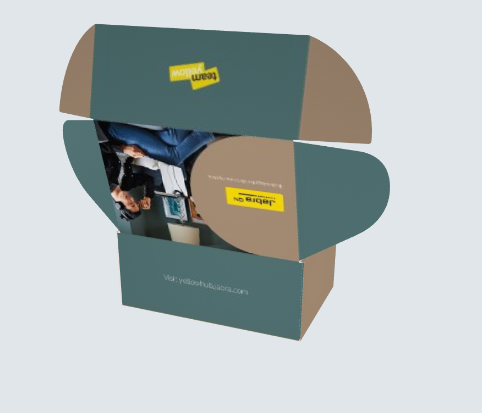
This box is not retail packaging. Briefed by the marketing manager, it welcomes channel account managers into the YellowHub partner program — so the audience is a named partner opening something addressed to them, not a shopper choosing between boxes on a shelf. Nothing about it has to survive a planogram or compete for attention; it has to make someone feel brought in.
That put the work on the inside. I built the structural system — 3D renders, the internal surface layout, and the die-lines controlling exactly how the box opens — so that the order of opening is the order the message arrives in: the mark first, then the welcome copy on the printed interior, then the product. The reverse view exists because the fold is what times that, and a flat layout cannot show it. What I handed over were the final master mechanicals, and the box went to print from them.
Walmart POS
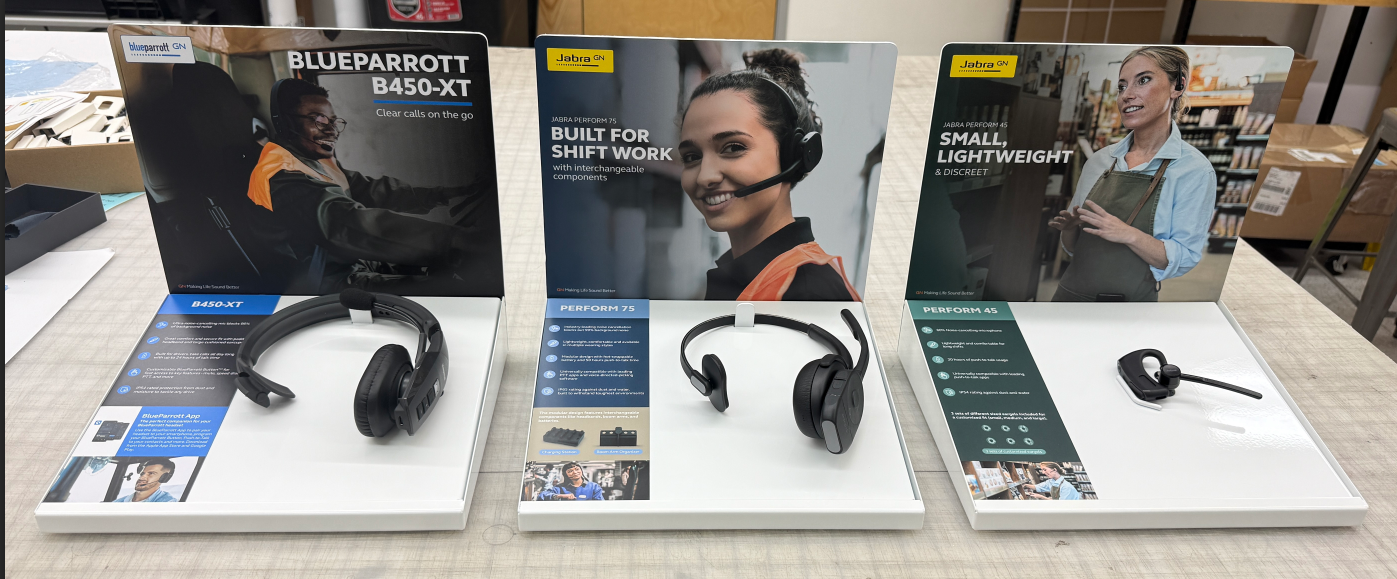
Walmart needed a way for warehouse staff to actually try these headsets before requesting them — not just see a spec sheet. I designed a break-room display system where employees could interact with each model directly, then either flag it to their manager or order it themselves. Built as modular endcaps using linked production files, so swapping in a new feature callout, image, or model name didn’t mean rebuilding the display — just swapping the linked asset and reprinting.